
Tim Curry: The actor who made the unusual unforgettable
From Rocky Horror to Pennywise and the stage, Tim Curry built a career on wit, risk and unforgettable...

 18°C
18°C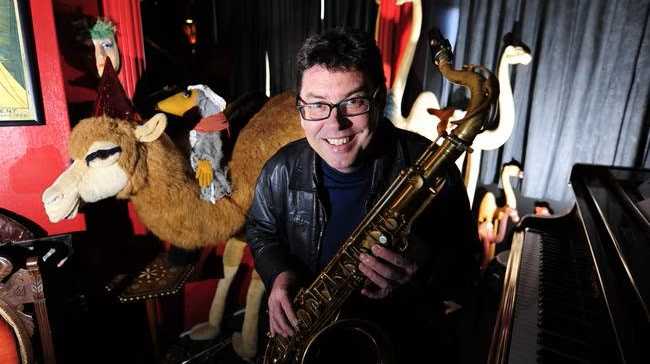
The voice of James Valentine was never just background noise. It was something people chose. Something they returned to, day after day, because it felt familiar, intelligent and deeply human.
For decades, he was part of the rhythm of Sydney life. Not loud. Not confrontational. Not chasing headlines. Just present, consistent and real in a way that is increasingly rare.
That consistency is what made his final years so confronting for listeners.
His cancer diagnosis, first revealed in 2024, marked the beginning of a different chapter. What followed was not just a health battle, but a public journey that he chose to share with the same honesty he brought to his work.
After being diagnosed with oesophageal cancer, Valentine underwent surgery and stepped away from radio. He later returned to the Afternoons program, resuming his role while being closely monitored by doctors.
But the return was not permanent.
Months later, he shared that further tumours had been discovered, this time in the omentum, a part of the body many had never heard of until he explained it in his own words.
"It's described usually as a fatty veil, which extends from the stomach over your intestine. Quite what it does, not sure; partly packaging, partly helping to protect the intestine, possibly some role in dealing with infection."
"Whatever it's meant to do it is currently largely squeezing my bowel and causing constriction and constipation and general discomfort in that part of the world."
"Oh, it's been a fun few weeks, my friends. I am now way too familiar with the digestive aisle of my local chemist."
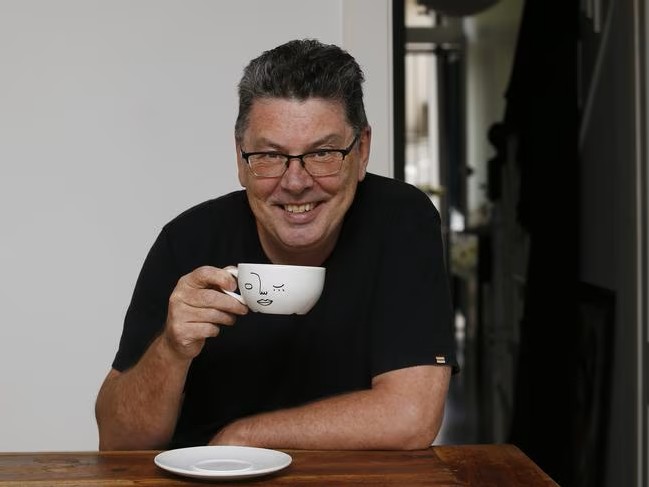
Even in that moment, there was no attempt to dramatise or soften reality. He spoke openly about discomfort, about treatment, about the practical realities of living with cancer.
He prepared for immunotherapy and chemotherapy, acknowledging both the promise and the uncertainty. His focus was clear and disciplined.
"Immunotherapy is the great hope of everyone these days. I'm eligible, as in it's considered that it's very likely to be effective in my case."
"Side effects of the treatment range from mildly irritating to horrendous, so I think I'll just deal with them. Best I focus on this one thing, and give the medicine and the process its best chance."
That clarity carried through to his eventual decision to step away from broadcasting altogether. After more than two decades hosting Afternoons, he confirmed he would not return to the microphone, choosing instead to prioritise his health and his family.
"This decision has been hard for me to make but I need to focus on getting better and being with family and friends and making sure I'm giving my health my best shot."
It was the end of a defining era in Australian radio.
But reducing his story to its final chapter misses the point entirely.
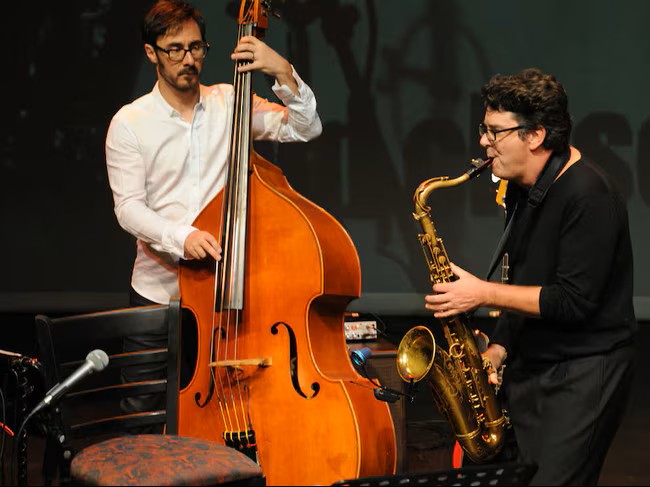
Long before radio, Valentine was a musician. A professional saxophonist who built his career in the Australian music scene, performing with bands including The Models and collaborating with artists such as Wendy Matthews, Kate Ceberano and Jo Camilleri.
Music was not just a phase. It shaped the way he thought, the way he communicated and the way he approached broadcasting.
Improvisation. Rhythm. Listening.
All of it carried over.
When he transitioned into media in the 1980s, beginning with children's television at the ABC, he brought that same instinct with him. He was not trying to dominate the conversation. He was trying to create one.
That approach found its perfect home in radio.
By the time he took over the Afternoons program on ABC Radio Sydney in 2001, he had developed something distinctive. Not a formula, but a style.
It was built on curiosity rather than confrontation.
Where others pushed for conflict, Valentine created space. Space for stories, for humour, for unexpected moments that could not be scripted.
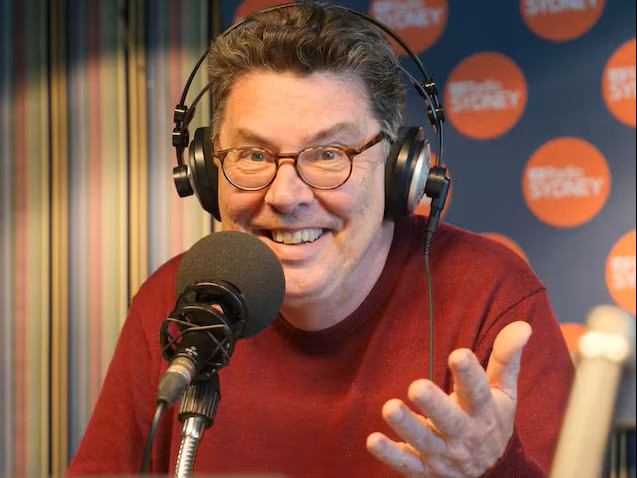
Listeners were not treated as callers. They were participants.
Segments often moved in directions no one could predict. Conversations evolved organically. There was a sense that anything could happen, but it would always remain respectful, thoughtful and engaging.
That is harder to do than it sounds.
It requires restraint. It requires confidence. And above all, it requires genuine interest in people.
Colleagues often described him as a rare radio talent who brought humour, warmth and improvisation to talkback radio.
He had an ability to turn everyday moments into something meaningful, something engaging, something worth listening to.
It is why his audience stayed with him for so long.
And why his absence was immediately felt.
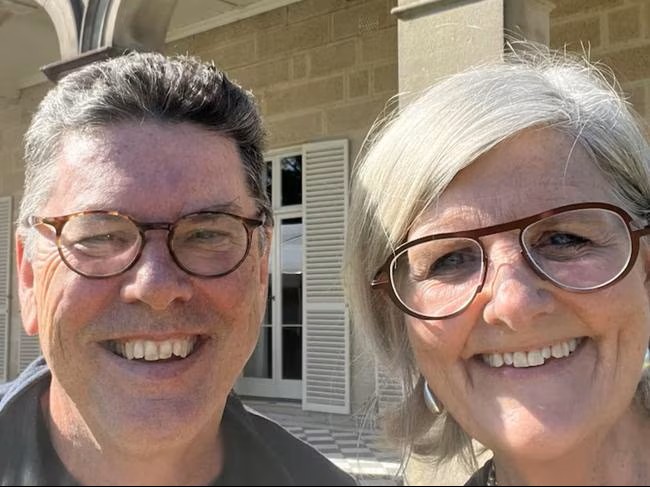
In the final stage of his life, that impact was formally recognised. He was awarded a Member of the Order of Australia, acknowledging his significant contribution to broadcasting and the arts.
It was a recognition that extended beyond his career. It acknowledged the way he shaped conversation, community and creativity in Australia.
He reminded audiences that connection matters.
That listening matters.
That kindness has a place in public life.
When news of his passing spread, tributes reflected that impact.
He was described as engaging, uplifting and deeply trusted. Someone who Australians felt they knew, even if they had never met him.
Valentine passed away at home surrounded by his family after a long illness.
His loved ones later shared that he had chosen voluntary assisted dying, a decision made with dignity and clarity.
He is survived by his wife Joanne and their children Ruby and Roy, who have spoken about his kindness, compassion and the joy he brought into their lives.
For audiences, the loss is different but still significant.
Because voices like his are rare.
Not because they are loud or dominant, but because they are steady. Because they prioritise connection over performance.
That is what made him distinctive.
And that is what will endure.
In a media environment that often rewards speed and noise, James Valentine built something quieter and more lasting.
He made radio feel personal.
He made conversation feel valuable.
And for those who listened, he made ordinary afternoons feel just a little more meaningful.
That is not easy to replicate.
Which is exactly why it mattered.